


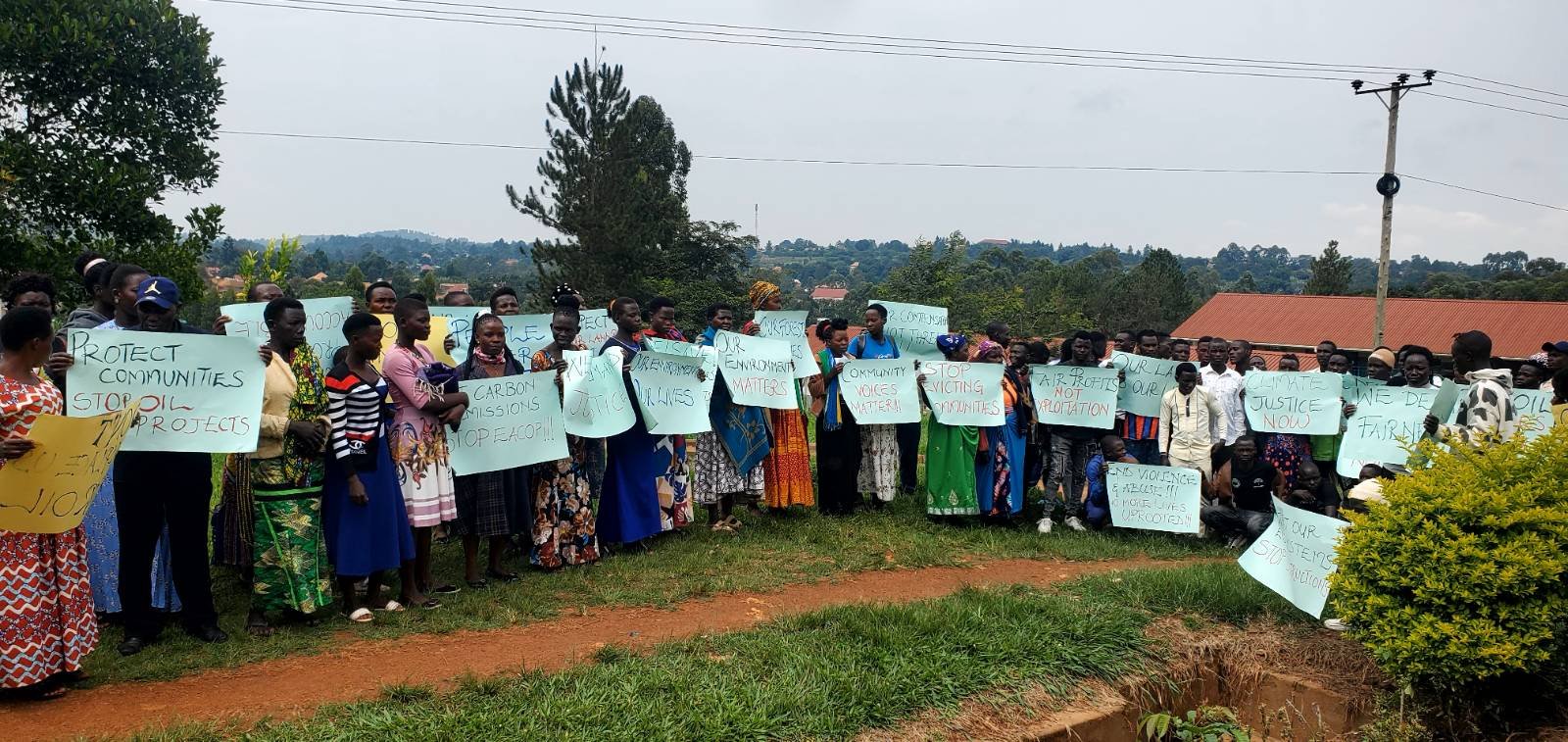
The East African Crude Oil Pipeline (EACOP) project continues to spark controversy in Uganda, highlighting the ongoing struggle between corporate interests and citizens’ rights. On August 26th, 2024, approximately 300 members of the Hoima community gathered at Kitara Secondary School but were prevented from presenting their grievances to the EACOP offices in Hoima town; only a few were allowed to proceed, as the police forced the rest to return home. See our press release.
In the same breath, 20 young activists, including representatives of the EACOP-Project-Affected Persons (PAPs) from Hoima, were rounded up by police in Kampala while marching towards TotalEnergies HQ and remanded in Luzira prison until September 3 under a ‘common nuisance’ charge. Initially, there were 21, but one person who was detained at Jinja Road Police Station was released after the police took down their details.
These events clearly demonstrate that the government prioritizes the interests of TotalEnergies and China National Offshore Oil Company (CNOOC), which own 70% of the project, over the well-being of its citizens. Although it is claimed that EACOP serves the interests of the Ugandan people, the pipeline will transport oil to meet the energy demands of the global market while Ugandans and Tanzanians sacrifice their biodiversity, livelihoods, and risk contamination of their water sources, including Lake Victoria, which more than 40 million people in the region depend on.
The government’s actions reflect a worrying trend in the Global South where transnational corporations can pressure governments and key bodies to prioritize their interests. Notably, the African Energy Chamber (AEC) is planning a joint lawsuit against Western financiers for discriminating against African oil and gas projects – needless to mention the global financial institutions are avoiding the controversial EACOP project due to risks including environmental and social concerns (documented human rights violations), climate issues, incompatibility with their own ESG standards, and, in some cases, financial risks (rapid global transition to clean energy will render EACOP a stranded asset). Those supporting the AEC also claim that exploring fossil fuels will reduce energy poverty in the country. How ironic, when pipelines like EACOP are intended to export oil to meet energy needs abroad? How does exporting oil while destroying livelihoods, fertile lands, and risking oil spills in wetlands provide energy to some 600 million energy-poor Africans?
When such important institutions as the AEC turn into fossil fuel lobby groups, protests become necessary as an opportunity to raise awareness of the challenges EACOP-PAPs are facing and the imminent threat the controversial project poses to the environment, people, and the climate. Indeed, it is the only way to pressure EACOP project backers to engage more transparently and remain accountable.
Thankfully, Africans are wiser and see EACOP for the neocolonial project it is. The youth are not taking this lying down and are demanding that their government prioritize them, their environment, and the climate over short-term profits that will not trickle down to the locals.
We express our solidarity with the detained, call for their release, and demand that the charges against them be dropped. The fight for a just and sustainable future in Uganda must continue, focusing on renewable energy solutions that benefit all Ugandans, not just foreign corporations.